
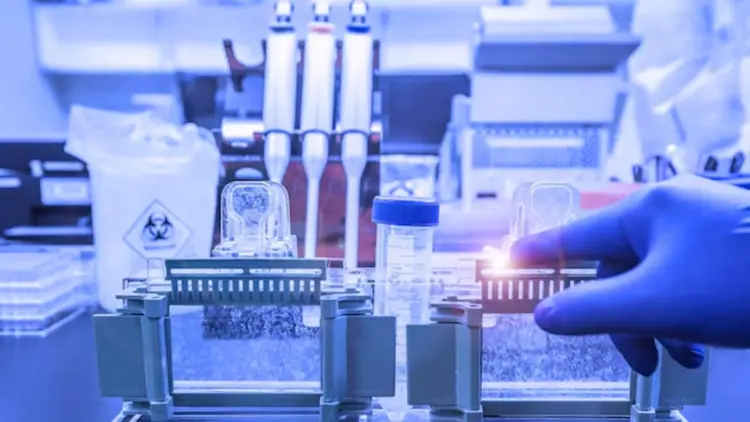
Cells often switch proteins on or off to control their function. One common switch is phosphorylation, which adds a phosphate group to a protein. This change usually happens on serine, threonine, or tyrosine amino acids to change the protein’s activity and function. Some studies reveal that about 30% of proteins in a cell undergo phosphorylation.
Phosphorylation plays a key role in almost all cellular activities. It affects the cell cycle, metabolism, nerve signaling, and immune response.
To detect protein activation, scientists check if the protein is phosphorylated. For this, they use phospho-specific antibodies. These antibodies recognize the protein only when it has a phosphate at a certain site. They replace older, radioactive methods. Now, researchers run a Western blot and use these antibodies to find the active form of a protein.
The Role of Phospho Antibodies in Detecting Activated Proteins
Phospho antibodies (also called phospho-specific antibodies) are designed to bind to a protein only when a specific phosphorylation is present.
It means you can pinpoint the active form of a protein as a distinct band on the membrane during Western Blotting.
If the protein isn’t phosphorylated, the phospho antibody will not bind, and you won’t see a band
This contrast with a regular antibody (that detects the protein regardless of phosphorylation) lets you tell active vs. total protein apart in your samples.
Key Features of Phospho Antibodies
- Bind only to phosphorylated proteins at specific sites.
- Help detect the active state of a protein.
- Used alongside total-protein antibodies for accurate analysis.
- Available in broad (e.g., anti-phosphotyrosine) or site-specific forms.
- Validated carefully to avoid false signals.
- Essential in cell signaling and protein function studies.
How Western Blotting Uses Phospho Antibodies?
Western blotting with phospho antibodies is a common way to check if a protein is active. It gives clear results and does not use harmful radioactive methods. Scientists first run SDS-PAGE to separate proteins, and then they move the proteins onto a membrane.
After that, they add a phospho-specific antibody to the membrane. If the protein is phosphorylated, a band appears at the right size.
Scientists often also use another antibody that shows the total protein. This can be on the same blot or a second one. By comparing both bands, they can see if the protein’s activation changes or not. This helps them know if the signal comes from more phosphorylation or just more protein.
Tip: To get the best results, buy phospho antibodies for western blot from a reliable supplier.
Applications Of Phospho Antibodies In Signal Transduction And Disease Research
Mapping Cell Signaling Pathways:
Cell biologists use phospho antibodies to see how cells respond to signals. They give cells a treatment — like a drug, growth factor, or stress. Then they check which proteins get phosphorylated. This shows which pathways turn on inside the cell.
For example, a phospho-ERK1/2 antibody tells if the MAPK pathway is active. A strong band means the pathway is turned on. Different treatments give different patterns, helping scientists understand how signals move through the cell.
Cancer Research:
In cancer, proteins often stay active because of too much phosphorylation. This happens when enzymes called kinases are overactive in tumor cells. As a result, signals that tell cells to grow or survive never turn off. Phospho antibodies help scientists find these overactive signals.
For example, constant phosphorylation of AKT or STAT3 shows the cell is stuck in growth mode. By using phospho antibodies, researchers can track these changes.
This is important for studying cancer and testing new drugs. When a drug is used, scientists check if it reduces the phosphorylated (active) form of the target. This shows whether the drug is working.
Overall, phospho antibodies are powerful tools in cancer research and therapy development.
Immunology and Cell Activation:
Immune cells use phosphorylation to send signals. When a T cell or macrophage gets a stimulus, kinases like JAKs and MAPKs activate. These kinases add phosphate groups to key proteins. Phospho-specific antibodies help detect these activation steps.
For example, a phospho-JAK2 antibody shows JAK2 activation after LPS treatment. In one study, JAK2 gets phosphorylated just 2 minutes after the stimulus. When cells are treated with a JAK2 inhibitor, the signal becomes weak. This shows that the stimulus activates JAK2, and the drug blocks it.
Other phospho antibodies, like those for STAT, NF-κB, or MAPK, track immune signaling. Researchers use them in vaccine and autoimmune disease studies to see which proteins turn on.
Neuroscience and Other Fields
Phospho antibodies are useful in many research areas. In neuroscience, they help track changes in brain proteins during learning and memory.
For example, scientists study phosphorylation of neurotransmitter receptors and synaptic proteins. In metabolism research, phospho antibodies show how insulin signals through proteins like Akt. Phospho-Akt increases when insulin is active.
Any field that studies protein function can use phospho-specific Western blots. These antibodies show the active state of proteins, not just how much protein is present. This helps researchers link outside signals to real changes inside cells.
Why Phospho Antibodies Matter In Your Research?
- Help you detect active proteins, not just total levels. This reveals whether a protein is “switched on” through phosphorylation.
- Let you compare conditions more accurately. A protein may be present in both samples, but only be active in one.
- Allow you to measure how much of a protein is active. For example, 50% of protein X might be active after treatment, compared to 10% before.
- Show direct effects of drugs or stimuli. Blotting for a downstream phospho-protein confirms if a pathway is turned off or on.
Conclusion:
Phosphorylation is like an on/off switch for proteins. Just knowing a protein is there isn’t enough—you also need to know if it’s active. Phospho-specific antibodies help you do that. They detect proteins only when phosphorylated, showing their active state on a Western blot. Phosphorylation acts like a switch that turns proteins on or off.
For example, a Rabbit JAK2 Polyclonal Antibody can show JAK2 activation after a stimulus. If the signal disappears with an inhibitor, you know the pathway is blocked.
If you’re doing signaling studies or testing treatments, buy phospho antibodies for Western blot to get clearer, more meaningful results. These tools let you move beyond “Is the protein present?” to “Is it active and doing its job?
Author




Leave a Reply