
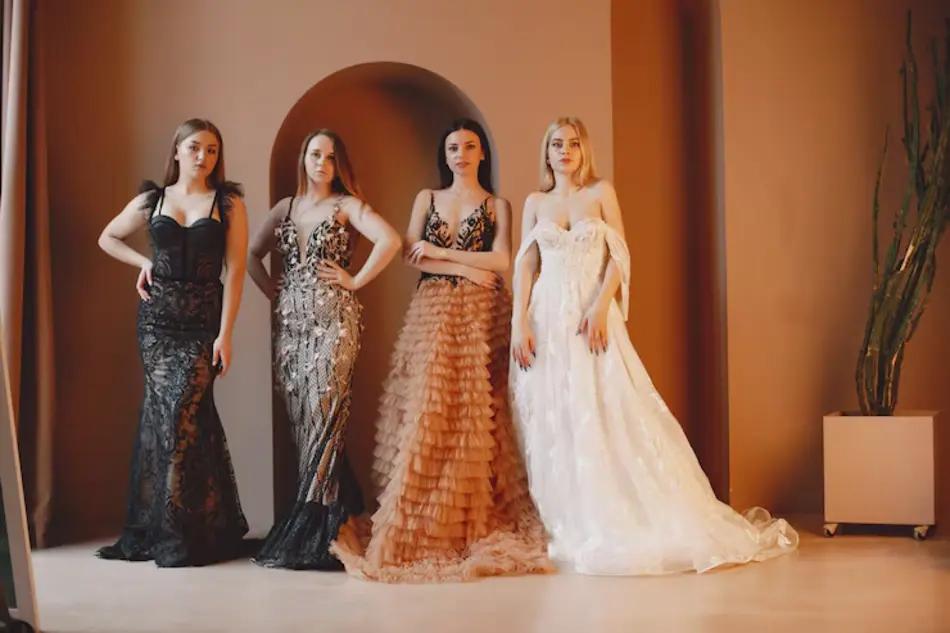
Formal events come with their own dress code expectations, and knowing how to navigate them makes a meaningful difference in how you present yourself. Whether you are attending a gala, an awards ceremony, a charity dinner, or a corporate formal event, the way you interpret evening attire signals your awareness of the occasion and your personal sense of style.
Understanding Dress Code Terminology
Dress code language can be ambiguous, and different events use different terminology to communicate expectations. ‘Black tie’ is one of the most formal standards, typically calling for floor-length gowns, structured silhouettes, and formal accessories. ‘Black tie optional’ relaxes the requirement slightly, allowing for cocktail-length options alongside floor-length styles. ‘Formal’ or ‘semi-formal’ opens the range further, accommodating midi lengths and more casual fabrications.
When an invitation does not specify a dress code, it is worth consulting the event’s venue, time of day, and purpose. A late-evening event at a hotel ballroom calls for more formality than a late-afternoon event at a restaurant’s private dining room, even if neither explicitly states a dress code.
The Core Elements of Formal Evening Dressing
Fabric, silhouette, and finishing together define the category a gown falls into. Floor-length hemlines made from structured or fluid luxury fabrics—crepe, chiffon, silk, or velvet—are the foundation of true formal evening dressing. Silhouette matters as well: column gowns, A-line styles, and ball gowns all read as appropriately formal when executed in the right materials.
Selecting evening attire that works across multiple formal occasions requires understanding which styles translate well from event to event. Neutral tones, classic silhouettes, and restrained embellishment tend to be the most versatile choices for building a wardrobe that serves you at multiple formal functions throughout the year.
Neckline and sleeve treatments contribute significantly to how formal a gown reads. High necklines and long sleeves lean more conservative, while plunging necklines or one-shoulder constructions introduce a more contemporary edge. Both can be entirely appropriate depending on the event’s tone and the wearer’s comfort level.
Fabric Choices and Their Impact
The fabric of an evening gown affects how it moves, how it photographs, and how it endures through a long event. Velvet is rich and seasonal, performing best in cooler months and adding depth to darker shades. Silk charmeuse drapes beautifully and reflects light, while matte crepe creates a clean, sculpture-like silhouette that reads as modern and refined.
Heavily embellished fabrics—brocades, sequined mesh, and beaded chiffon—carry a high degree of formal visual weight and are appropriate for the most formal events. Embellished gowns tend to require less jewelry and simpler accessories, as the fabric itself becomes the focal point of the look.
Color and Occasion
Color selection for formal evening events carries cultural and stylistic meaning. Classic black remains a reliable and sophisticated choice for nearly any formal occasion. Deep navy, forest green, and burgundy offer alternatives to black while maintaining the same level of formality. Metallics—gold, silver, and bronze—are appropriate for evening and tend to photograph extremely well under event lighting.
For daytime formal events or those with a lighter atmosphere, pastels and softer tones are more appropriate. Blush, powder blue, and champagne work particularly well in spring and summer formal contexts, where heavier colors might feel out of season.
Accessories and Finishing Details
The right accessories complete a formal look without overwhelming it. Structured evening clutches in metallic or neutral tones are the most versatile option. Statement jewelry—chandelier earrings, a cuff bracelet, or a delicate pendant necklace—should be selected based on the neckline of the gown rather than independent of it. Heels are standard for formal events, though elegant flat sandals or low-heeled mules are increasingly accepted.
Paying attention to finishing details—the condition of a hem, the fit of a bodice, the quality of closures—reflects the same care as the initial garment selection. A beautifully chosen gown is only enhanced by thoughtful grooming, well-maintained footwear, and a cohesive overall presentation.
Conclusion
Formal event dressing rewards those who approach it with intentionality. Understanding the event’s expectations, selecting fabric and silhouette appropriate to the occasion, and attending to fit and accessories all contribute to a polished result. Evening attire is an investment—in time, selection, and care—that pays dividends in confidence and presentation on the occasions that matter most.
Author



Leave a Reply