
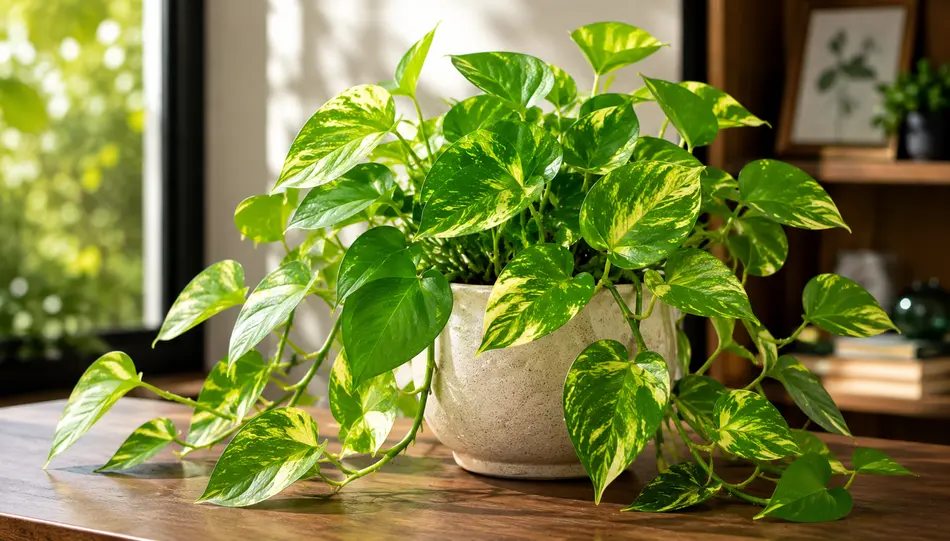
The money plant has earned a permanent place in Indian homes — not just for its vivid green trails and cascading vines, but for the belief that it draws prosperity, good energy, and fresh air into living spaces. Whether you are decorating a compact apartment in Mumbai or adding greenery to a sprawling bungalow in Chennai, the money plant adapts effortlessly to every corner of your home. This guide walks you through everything you need to know about keeping this beloved plant healthy, happy, and thriving.
Is Money Plant Good for Home?
Absolutely. The money plant is one of the most NASA-recommended air-purifying houseplants, proven to filter toxins like formaldehyde, benzene, and carbon monoxide from indoor air. Beyond science, Vastu Shastra and Feng Shui traditions regard the money plant as a symbol of good fortune and abundance, making it a popular choice during housewarmings, festivals, and gifting occasions.
Its appeal lies in its simplicity: it asks for very little while giving a great deal. Lush green leaves, trails of vines over shelves and furniture, and the calming effect of indoor greenery are reasons enough to keep one at home.
In Which Direction to Keep Money Plant?
Placement matters significantly. According to Vastu Shastra, the ideal direction to place a money plant is the south-east corner of your home — the zone governed by Venus, associated with wealth and growth. Keeping the plant in the south-east is believed to bring financial stability and remove negative energies.
Avoid placing money plants in the north-east direction, as this is considered inauspicious in traditional belief. A spot near a window with filtered sunlight or gentle morning sun is also ideal for the plant’s health, irrespective of directional beliefs.
If you are ready to welcome one home, you can easily buy money plant online from Urvann, where healthy, well-rooted plants are delivered right to your doorstep. Those looking for convenience can also place a money plant online order and choose from a wide variety including golden pothos, marble queen, and big money plant varieties.
Money Plants Online: Which Variety Should You Choose?
There is more diversity in the money plant family than most people realise. Here is a quick guide to the popular varieties available:
- Golden Pothos (Epipremnum aureum): The most common variety — heart-shaped leaves with golden-yellow variegation, incredibly hardy.
- Marble Queen Pothos: White and green marbled leaves, stunning for living rooms and home offices.
- Neon Pothos: Bright, lime-green leaves that glow in indirect light — ideal for brightening dim spaces.
- Big Money Plant: A mature, fuller version with larger leaf size that suits spacious balconies and floors.
- Chinese Money Plant (Pilea peperomioides): Circular, disc-shaped leaves on upright stems — trendy and modern in aesthetic.
Exploring money plants online gives you access to all these varieties with the added benefit of comparing sizes, pot types, and care instructions before purchasing.
Can I Spray My Money Tree with Neem Oil?
Yes, and it is actually recommended. Neem oil is an organic, plant-safe solution to combat common pests like spider mites, mealybugs, aphids, and fungus gnats — all of which can attack money plants, especially during humid seasons.
To use neem oil correctly:
- Dilute neem oil with water (2–3 ml per litre) and add a few drops of mild liquid soap to emulsify.
- Spray on the underside of leaves as well as the top.
- Apply in the evening or early morning to avoid leaf burn from sunlight on wet leaves.
- Repeat every 7–10 days during active pest activity.
Neem oil treatments are safe for children and pets once dry, making them the go-to pest control for households.
What Are Common Money Plant Problems?
Despite being resilient, money plants can face a few challenges:
Yellowing Leaves: Most often caused by overwatering. Allow the topsoil to dry completely between watering sessions. Ensure the pot has drainage holes.
Brown Leaf Tips: Typically a sign of low humidity or fluoride buildup in tap water. Try using filtered water and misting the leaves occasionally.
Leggy Vines with Small Leaves: Indicates insufficient light. Move the plant closer to a window with bright, indirect light.
Root Rot: Happens when the plant sits in waterlogged soil. If you notice wilting despite moist soil, remove the plant from the pot, trim rotted roots, and repot in fresh, well-draining medium.
Catching these signs early makes a significant difference in plant recovery.
Money Plant Online Same Day Delivery
One of the most searched questions by plant lovers across Indian cities is whether they can get a money plant delivered the same day. The answer is yes — Urvann offers same day delivery for money plants in many major cities. This makes it perfect for last-minute gifting, festival orders, or simply when you do not want to wait.
From a potted golden pothos in a ceramic planter to a hanging marble queen in a coco coir basket, the variety available online is far greater than what local nurseries typically stock.
Conclusion
The money plant is more than just a pretty vine — it is an air purifier, a Vastu companion, and a low-effort plant that rewards you with lush growth. Whether you are a seasoned plant parent or just beginning your indoor garden journey, this plant is the perfect starting point. Give it bright indirect light, let the soil breathe between waterings, and occasionally treat it to a neem oil spray — it will thrive for years.
Author


Leave a Reply